Impact analysis example
What breaks when you change React Router (packages/react-router)?
Real arc impact output on React Router (packages/react-router) — same structure as the homepage demo. Know blast radius before you merge.
Project: React Router (packages/react-router) · Score: 72.9/100 (Moderate technical debt) · 69 modules · 289 edges
Engineering decision simulation
Validation procedure 01 · merge vs. hold before output
Before arc impact
You plan a change to a high fan-in module in React Router (packages/react-router). Would you merge without knowing blast radius?
Typical answer: hold — need dependency context.
After arc impact
Structured output below: score, hotspots, corridors, and high-risk modules — same field schema as the homepage proof.
Decision: confirm hold, narrow change, or inspect paths first.
Published as part of the validation record. Run locally: arc impact <file-you-are-changing>
Architectural Risk Map
Where risk accumulates by control surface — drill down Surface → Substrate → Mechanism → Evidence.
See control surfaces →Dependency evidence
Architecture visualization
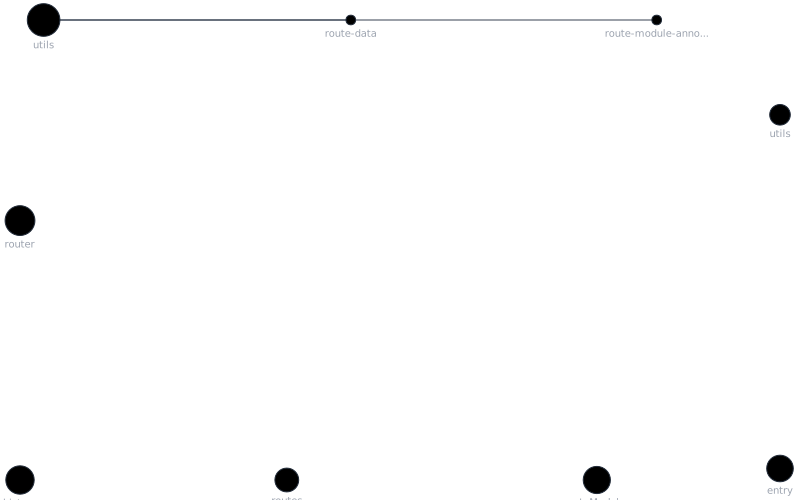
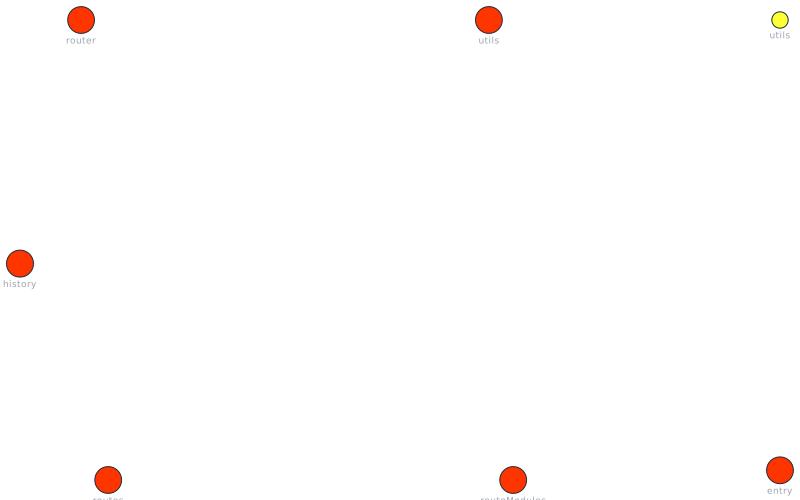
Diagrams are generated from ArcSight analysis data. Dependency graph and risk map show key modules; subsystem view shows high-level structure.

Architecture score & metrics
Score: 72.9/100 · Stability: 17/100 · Status: moderate_risk · Confidence: 100%
- Dependency cycles: 49
- Layer violations: 2
- Duplicate authorities: 22
Modules to inspect
One row per module. Fan-in is direct dependents. Blast radius is downstream modules reachable from that file.
- lib/router/utils35 dependents
- lib/router/router24 dependents
- lib/router/history20 dependents
- lib/dom/ssr/routeModules17 dependents
- lib/dom/ssr/entry16 dependents
- lib/dom/ssr/routes11 dependents
- lib/types/utils7 dependents
- lib/router/history45 modules
- lib/router/utils44 modules
- lib/router/router43 modules
- lib/dom/ssr/routeModules43 modules
- lib/dom/ssr/entry43 modules
- lib/dom/ssr/routes43 modules
| Module | Fan-in | Blast | Risk |
|---|---|---|---|
| lib/router/history | 20 | 45 | MEDIUM |
| lib/router/utils | 35 | 44 | HIGH |
| lib/router/router | 24 | 43 | MEDIUM |
| lib/dom/ssr/routeModules | 17 | 43 | MEDIUM |
| lib/dom/ssr/entry | 16 | 43 | CRITICAL |
| lib/dom/ssr/routes | 11 | 43 | CRITICAL |
| lib/types/utils | 7 | MEDIUM |
Architectural gravity centers
lib/router/history— concentrates too many responsibilitieslib/router/history— shared utility hublib/router/utils— concentrates too many responsibilitieslib/router/utils— shared utility hublib/router/utils— crosses a layer boundary
CLI workflow
Scan → Fix → Finish → Watch. Nothing else required.
arc scanFind issuesarc fixApply fixesarc finishResolve remainingarc watchKeep clean
Key takeaways
- •Structural scan reports dependency cycles — inspect impact paths before refactors that cross module boundaries.
- •High fan-in modules are change-risk zones; run
arc explain <path>before refactoring. - •Run the full workflow (analyze, hotspots, explain, impact, snapshot, drift) in your repo for deterministic architecture insights.
Run ArcSight on your repo
Install the CLI and run analyze, then hotspots and explain for the same workflow.
This case study is generated from ArcSight analysis data. View short analysis. View all analyses